Everything You Need to Know Before You Move — From Someone Who Lives Here
The Duley Group. Keller Williams Market Pro Realty.
PART ONE: WELCOME TO NORTHWEST ARKANSAS
Chapter 1: So You’re Thinking About Moving to Northwest Arkansas
If we were sitting together at Onyx Coffee on a Saturday morning — the one downtown where the baristas know half the people by name — here’s what I’d tell you before you packed a single box.
Before we look at neighborhoods. Before we talk about home prices. Before we even discuss school districts. I’d hand you a warm Onyx Delight and ask one question:
“What kind of life are you hoping to build?”
Because after helping people relocate to Northwest Arkansas year after year, we’ve learned something that Zillow can’t tell you.
People almost never regret buying the wrong floor plan. They regret buying into the wrong lifestyle.
Maybe you’re relocating for a position at Walmart’s home office. Maybe you’ve accepted a role with Tyson Foods, J.B. Hunt, or one of the hundreds of tech startups and suppliers that orbit them. Maybe you’re a remote worker who’s tired of paying coastal prices for half the space and twice the stress. Maybe you’re looking for a place where your kids can ride bikes after school and you can still grab a genuinely good dinner downtown on a Tuesday.
Or maybe you’ve been hearing everyone talk about Northwest Arkansas — in the news, on Instagram, from that friend-of-a-friend who moved here last year — and you’re wondering: Is it really as good as people say?
The short answer: We think so. But probably not for the reasons you expect.
What Northwest Arkansas Actually Is
Northwest Arkansas — NWA, as the locals call it — isn’t one city. It’s a collection of towns and cities that have grown into each other along the I-49 corridor, each with its own personality, pace, and reason for being here. Together they form a metropolitan area of roughly 600,000 people — and growing by about 40 people every single day.
The four anchor cities are Fayetteville, Springdale, Rogers, and Bentonville. Around and between them, communities like Bella Vista, Centerton, Lowell, Siloam Springs, Pea Ridge, Farmington, Prairie Grove, Tontitown, Cave Springs, Elm Springs, and Gravette each bring something different to the table.
This guide exists because “Northwest Arkansas” is too broad a term to be useful when you’re actually choosing where to live. The person who thrives in downtown BentonvilleNorthwest Arkansas — NWA, as the locals call it — isn’t one city. It’s a collection of towns and cities that have grown into each other along the I-49 corridor, each with its own personality, pace, and reason for being here. Together they form a metropolitan area of roughly 600,000 people — and growing by about 40 people every single day.
The four anchor cities are Fayetteville, Springdale, Rogers, and Bentonville. Around and between them, communities like Bella Vista, Centerton, Lowell, Siloam Springs, Pea Ridge, Farmington, Prairie Grove, Tontitown, Cave Springs, Elm Springs, and Gravette each bring something different to the table.
This guide exists because “Northwest Arkansas” is too broad a term to be useful when you’re actually choosing where to live. The person who thrives in downtown Bentonville walking to the Momentary might not be the same person who wants five acres outside Prairie Grove. The family who loves the Bella Vista lake-and-trail life might feel out of place in a Fayetteville college-neighborhood rental. And that’s exactly the point — there’s a fit here for almost everyone, but you have to know what you’re choosing.
What You’ll Find in This Guide
Part One covers the big picture — what NWA is, why people move here, what it actually costs, and what daily life looks like.
Part Two breaks down every major town and community so you can compare them honestly and choose where to plant roots.
Part Three covers the practical stuff — schools, jobs, the housing market, and how to actually make the move.
Part Four answers the questions everyone asks — the FAQs we hear from every single person relocating here.
We’re going to be honest about what’s great and what’s still growing. Because the worst thing a relocation guide can do is paint a fantasy. The best thing it can do is help you make a confident, informed decision — whether that means moving here or realizing another place fits better.
Let’s get into it.
Chapter 2: Why Northwest Arkansas? (The Honest Answer)
The Economy That Drives Everything
Let’s address the obvious: Walmart is headquartered in Bentonville. It’s the largest company in the world by revenue, and its presence shapes this region in ways both visible and invisible. But the economic story of NWA is bigger than one company.
Tyson Foods is headquartered in Springdale. J.B. Hunt Transport Services is based in Lowell. Together, these three Fortune 500 companies create a gravitational pull that attracts thousands of suppliers, vendors, tech companies, marketing agencies, logistics firms, and professional service providers. When a Walmart supplier needs a team on the ground in Bentonville, they open an office. When a food industry executive works with Tyson, they spend time in Springdale. This ecosystem means that NWA has an unusually deep and resilient job market for a region its size.
Beyond the big three, the region has developed strengths in healthcare (with major hospital systems and a growing medical corridor), higher education (the University of
Arkansas in Fayetteville is the state’s flagship campus with over 32,000 students), and a rapidly expanding technology and startup scene. The Northwest Arkansas Council has invested heavily in making the region attractive to tech talent and entrepreneurs.
The Outdoor Lifestyle
Northwest Arkansas has invested more in quality-of-life infrastructure than almost any region its size in America. The Razorback Regional Greenway is a 40-mile paved trail system connecting Fayetteville to Bella Vista, running through the hearts of every major
city along the way. On any given Saturday, you’ll see families biking to the farmers market, serious cyclists training for the next race, and people just walking their dogs.
The mountain biking scene is world-class. Bentonville is known as the “Mountain Biking Capital of the World,” with hundreds of miles of purpose-built trails — from the Slaughter Pen Hollow system to Coler Mountain Bike Preserve to the newer trails at the Railyard. The International Mountain Bicycling Association (IMBA) designated NWA as a
Regional Ride Center, one of only a handful in the world.
Beyond biking, you have Beaver Lake with 28,000 acres of water for boating, fishing, and swimming. The Buffalo National River — America’s first national river — is about an hour east. The Ozark National Forest offers hiking, camping, and some of the most
beautiful fall foliage you’ll find anywhere. Devil’s Den State Park, Hobbs State Park, and Withrow Springs State Park are all within easy driving distance.
Arts, Culture, and Food
If your mental image of Arkansas doesn’t include world-class art museums, you’re a few years behind. Crystal Bridges Museum of American Art in Bentonville — founded by Alice Walton — houses works from Norman Rockwell to Andy Warhol to contemporary installations, all in a stunning Moshe Safdie-designed building set into a ravine. General admission is free. The museum has fundamentally changed the cultural identity of the region.
The Momentary, a contemporary art space in downtown Bentonville, opened in 2020 in a converted cheese factory and hosts rotating exhibitions, performances, and concerts. TheatreSquared in Fayetteville is a professional theater company producing year-round programming. The Walton Arts Center brings Broadway tours, concerts, and
performances to Fayetteville. And the AMP (Arkansas Music Pavilion) in Rogers is an outdoor amphitheater that draws major touring acts from spring through fall.
The food scene has exploded alongside everything else. You can find chef-driven restaurants, authentic international cuisine from the communities that have grown around the major employers, farm-to-table spots sourcing from local producers, and the kind of coffee shops that would hold their own in Portland or Austin. The Fayetteville Farmers Market — running since 1973 — is one of the best in the region, and the Bentonville Farmers Market on the downtown square is a Saturday institution.
The Cost of Living Reality
People move to NWA from California, Texas, Colorado, and the Northeast and their eyes go wide when they see what housing costs here. But it’s important to be honest: NWA is no longer the ultra-bargain it was a decade ago. Prices have risen significantly as demand has grown.
What you get, however, is still dramatically more than what the same money buys in most major metros. A home that would cost $800,000 in Austin or $1.2 million in Denver might be $400,000–$550,000 here. A home that would be $2 million in the Bay Area might be $700,000–$900,000. The gap is real, even if it’s narrowed.
Arkansas also has a lower overall cost of living than the national average — lower utility costs, lower gas prices, lower insurance rates. Property taxes are generally reasonable. There is a state income tax, but rates are competitive with the region.
What’s Still Growing
Northwest Arkansas is growing fast, and that comes with growing pains. Traffic on I-49 during rush hour is heavier than it was five years ago — though “traffic” here still means
a 25-minute delay, not a 90-minute crawl. Infrastructure is being built to keep pace, but in some areas, roads, schools, and services are catching up to the population.
Housing inventory has improved in 2025–2026, giving buyers more options than the tight market of 2021–2023. New construction is happening across the region, from entry-level homes to luxury properties.
The region is also becoming more diverse as people move here from across the country and around the world. This is changing the cultural fabric in ways that most residents see as positive — more restaurants, more festivals, more perspectives.
Chapter 3: What It Actually Costs to Live Here
Housing
Housing is the biggest line item for most people, and NWA offers a wider range than you might expect. Here’s a realistic snapshot of what different budgets can look like across the region as of mid-2026:
Entry-Level Homes ($200,000–$300,000): These exist, but they’re competitive. You’re typically looking at smaller single-family homes, older construction, or homes in communities a bit further from the city centers — think parts of Springdale, Siloam Springs, western Bella Vista, or outlying areas. Condos and townhomes in this range are available in some areas.
Mid-Range Homes ($300,000–$500,000): This is the sweet spot for a lot of buyers relocating here. You can find a solid 3–4 bedroom, 2,000–2,800 square foot home in a good neighborhood across most of the region. In Bentonville proper, this range is tighter
— you may be looking at smaller homes or homes needing updates. In Rogers, Springdale, Centerton, or Bella Vista, this budget goes further.
Move-Up Homes ($500,000–$800,000): Newer construction, larger lots, premium neighborhoods, and locations closer to downtown amenities. In Bentonville, this gets you into many of the desirable established neighborhoods. In Fayetteville, this opens up historic districts and newer developments alike.
Premium and Luxury ($800,000+): Custom homes, acreage, lakefront property on Beaver Lake, historic homes in Fayetteville’s most sought-after neighborhoods, and new construction in premier developments. The luxury market has grown significantly in recent years.
Renting: Apartments range from roughly $900/month for a one-bedroom in more affordable areas to $1,800+ for newer luxury apartments in prime locations.
Single-family home rentals typically run $1,500–$3,000/month depending on size and location.
Other Costs
| Expense | What to Expect |
| Utilities (electric, water, gas) | Generally below national average; mild climate helps |
| Property taxes | Vary by county and city; generally moderate compared to national averages |
| State income tax | Arkansas has a progressive income tax; top rate is competitive regionally |
| Sales tax | Combined state and local rates vary by city, generally 8.5%–9.75% |
| Gasoline | Typically below national average |
| Groceries | Slightly below national average |
Chapter 4: A Year in the Life — What Living Here Actually Feels Like
Spring (March–May)
Dogwoods and redbuds bloom everywhere. The trails come alive. Farmers markets reopen. This is arguably the most beautiful season in the Ozarks — temperatures are mild, everything is green, and the whole region seems to exhale after winter. Spring also brings the Bentonville Film Festival, outdoor concert announcements, and the start of patio season at every restaurant.
Summer (June–August)
Hot and humid — this is Arkansas, after all. Temperatures regularly hit the 90s with humidity to match. But NWA has adapted: Beaver Lake fills with boats, the rivers draw float trips, and every community pool and splash pad is packed. The AMP in Rogers hosts major concerts. First Friday in Bentonville brings the downtown square to life.
Fayetteville’s Gulley Park concert series runs all summer. The key to summer here is embracing the water and the early mornings.
Fall (September–November)
Fall in the Ozarks is spectacular. The forests turn gold, orange, and red. The humidity breaks. Bikes, Blues & BBQ — one of the largest motorcycle rallies in the country — takes over Fayetteville (and divides local opinion). University of Arkansas Razorback
football dominates weekends. The War Eagle Mill Craft Fair draws thousands to the countryside. This is the season when everyone remembers why they live here.
Winter (December–February)
Mild by Midwest or Northeast standards. Snow is occasional and usually light — a couple of inches that melts within days. Ice storms are the real winter hazard, though they’re not annual events. Temperatures typically range from the 20s to 50s. The Lights of the Ozarks on the Fayetteville square and the Bentonville Christmas Parade make the holidays feel festive. Winter is also the slowest real estate season, which can mean opportunities for buyers.
PART TWO: FINDING YOUR TOWN — THE NWA COMMUNITY BREAKDOWN
This is the section where we get specific. Every town in Northwest Arkansas has a distinct personality. The right town for you depends on your priorities: commute, schools, lifestyle, budget, and the intangible “feel” that no data point captures.
Bentonville
The Vibe: Polished, energetic, and increasingly cosmopolitan. Bentonville is the economic engine of the region and it shows — downtown hums with activity, the restaurant scene keeps getting better, and the cultural amenities are unmatched for a city this size.
Who It’s For: Professionals and families who want walkability, cultural access, and proximity to the region’s largest employer. People who value being in the center of things. Mountain bikers who want trail access from their back door.
The Housing Market: Competitive. Bentonville has the highest home prices in the region on average. The downtown core is walkable and historic, with charming older homes that command a premium. Surrounding neighborhoods offer everything from established subdivisions to new construction. Expect to pay more per square foot here than anywhere else in NWA.
Commute Reality: If you work at Walmart’s home office, your commute could be 5–15 minutes depending on where you live. The downtown and home office area are walkable from many neighborhoods.
What Sets It Apart: Crystal Bridges Museum of American Art. The Momentary. The downtown square with its restaurants, shops, and events. The Slaughter Pen and Coler mountain bike trail systems. First Fridays. The farmers market. A genuinely walkable downtown core that feels more like a small city than a suburb.
Neighborhoods to Know: Downtown Bentonville Historic District, Stone Meadow, Wildwood, Creekside, Talamore, Angel Falls, Riverwalk Farms, and many newer developments on the west side.
Fayetteville
The Vibe: Eclectic, creative, and proudly independent. Fayetteville is a college town that grew up but never lost its edge. It’s the cultural and artistic counterweight to Bentonville’s corporate energy — and the two cities complement each other beautifully.
Who It’s For: People who want a vibrant, slightly funky community with live music, independent bookstores, and a strong sense of place. University faculty and staff. Young professionals who want nightlife and walkability. Families who value the Dickson Street energy but want established neighborhoods with mature trees.
The Housing Market: Diverse. Historic homes near the university and downtown command premium prices. East Fayetteville has established neighborhoods from the 1960s–1990s. West Fayetteville and areas along the Wedington corridor have seen significant new development. You can find everything from a 1920s bungalow to a new-construction subdivision.
Commute Reality: If you work in Bentonville, plan on 30–40 minutes each way on I-49
— longer during peak hours. Many people make this commute, but it’s worth factoring into your decision.
What Sets It Apart: The University of Arkansas. Dickson Street’s bars, restaurants, and live music venues. TheatreSquared. The Fayetteville Farmers Market. Razorback athletics. The Fayetteville Public Library — an architectural showpiece. The town-gown energy that keeps things interesting.
Neighborhoods to Know: Washington-Willow Historic District, Mount Sequoyah, Wilson Park area, Gulley Park area, Root School area, and newer developments in west Fayetteville.
Rogers
The Vibe: Practical, family-oriented, and increasingly dynamic. Rogers has transformed itself from a quiet railroad town into a thriving community with a revitalized downtown, major retail corridors, and some of the region’s most desirable neighborhoods.
Who It’s For: Families who want access to a variety of school options, established neighborhoods, and central access to the whole region. People who want to be near the Pinnacle Hills area’s shopping and dining. Professionals commuting to either Bentonville or Springdale.
The Housing Market: Broad and accessible. Rogers has some of the most varied housing stock in NWA — from historic homes near downtown to lakefront properties on Beaver Lake to new construction in the Pinnacle area. Generally more affordable than Bentonville, though premium neighborhoods command premium prices.
Commute Reality: Centrally located. 10–15 minutes to Bentonville. 15–20 minutes to Fayetteville. 10 minutes to Springdale. Rogers might be the best compromise location for a two-career household with jobs in different cities.
What Sets It Apart: The Pinnacle Hills area with its shopping, dining, and the AMP. Downtown Rogers with its historic charm, the Daisy Airgun Museum, and the Rogers
Experimental House (The R.E.X.) creative space. Lake Atalanta Park. The Railyard bike park. Easy access to Beaver Lake.
Neighborhoods to Know: Shadow Valley, Creekside, Pinnacle Country Club area, downtown Rogers Historic District, Cross Creek, and communities near Beaver Lake.
Springdale
The Vibe: Hardworking, diverse, and on the rise. Springdale has long been the industrial workhorse of NWA — home to Tyson Foods’ headquarters and a significant manufacturing base. In recent years, downtown revitalization has brought new energy, and the city’s diversity has created one of the region’s most interesting food scenes.
Who It’s For: Buyers looking for more affordable entry points into NWA homeownership. Families who appreciate cultural diversity. People who work in Springdale or south Rogers and want a short commute. Anyone who loves authentic international food — Springdale’s restaurants are a genuine regional asset.
The Housing Market: Generally the most affordable of the four anchor cities. A mix of older established neighborhoods, mid-century homes, and new construction. Your dollar goes further here than in Bentonville or Fayetteville.
Commute Reality: Central location. 10–15 minutes to Fayetteville or Rogers. 20 minutes to Bentonville. Easy I-49 access.
What Sets It Apart: The downtown revitalization along Emma Avenue. The Arkansas Children’s Northwest hospital. The Parsons Stadium and Rodeo of the Ozarks. The
Marshallese and Hispanic communities that have shaped the city’s culture and cuisine. The Shiloh Museum of Ozark History.
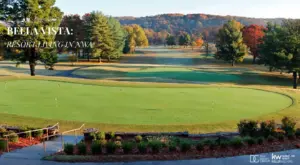
Bella Vista
The Vibe: Resort-meets-community. Bella Vista was originally developed as a retirement and vacation destination, and it still carries that DNA — but today’s Bella Vista is attracting families, remote workers, and outdoor enthusiasts of all ages.
Who It’s For: People who prioritize outdoor access above all else — golfers, mountain bikers, lake lovers. Retirees looking for an active, amenity-rich community. Remote workers who don’t need to commute daily. Buyers who want more space and land than they’d find closer to the city centers.
The Housing Market: Offers some of the best value in NWA. You can find homes on wooded lots, near lakes, or along golf courses at prices well below what comparable settings would cost in Bentonville or Fayetteville. The trade-off is distance from urban amenities.
The POA: Bella Vista has a Property Owners Association with annual fees that grant access to the community’s extensive amenities: seven lakes, multiple golf courses, pools, fitness centers, tennis and pickleball courts, and miles of trails. The POA fee is an additional cost to factor into your budget, but the amenity access is substantial.
Commute Reality: 15–25 minutes to Bentonville. 30–40 minutes to Rogers. 40–50 minutes to Fayetteville. Not ideal for daily commuters to the southern cities, but manageable for Bentonville.
What Sets It Apart: Seven lakes. Six 18-hole golf courses and one 9-hole course. The Back 40 trail system. Blowing Springs Park. The Gear Garden beer garden connected to the trail system. A pace of life that feels distinctly different from the busier cities to the south.
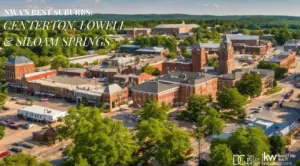
Siloam Springs
The Vibe: Charming, historic, and a little off the beaten path. Siloam Springs feels like a small town that happens to have excellent amenities — a beautiful downtown, a private university, and a strong sense of community identity.
Who It’s For: People who want small-town charm with real amenities. Families drawn to John Brown University or the local school system. Buyers who want more house for their money and don’t mind being 25–30 minutes from the urban core.
The Housing Market: Affordable relative to the Bentonville-Fayetteville corridor. Historic homes near downtown, established neighborhoods, and new construction all available at competitive prices.
Commute Reality: 25–30 minutes to Bentonville via Highway 412. 35–40 minutes to Fayetteville. This is a real commute, but many residents find the trade-off worthwhile.
What Sets It Apart: A genuinely beautiful historic downtown with brick streets and local shops. John Brown University. The Siloam Springs Kayak Park on the Illinois River. The Dogwood Festival. A pace of life that feels unhurried.
Centerton
The Vibe: Fast-growing suburban community adjacent to Bentonville. Centerton has absorbed enormous growth as Bentonville has expanded westward, transforming from a small town into a significant suburb.
Who It’s For: Families who want newer construction, larger lots, and Bentonville proximity without Bentonville prices. People who work in Bentonville and want a short commute. Buyers looking for newer subdivisions with community amenities.
The Housing Market: Predominantly newer construction — subdivisions from the 2000s through today. Generally more affordable than Bentonville proper, with larger lots available. Has seen some of the fastest population growth in the region.
Commute Reality: 10–20 minutes to most Bentonville destinations. Very manageable.
Lowell
The Vibe: Centrally located and convenient. Lowell sits at the crossroads of I-49 and Highway 264, making it one of the most accessible communities in the region. Home to
J.B. Hunt’s corporate headquarters.
Who It’s For: Commuters who want to be in the middle of everything. Families looking for established neighborhoods at moderate prices. People who work at J.B. Hunt or in the Rogers-Bentonville corridor.
The Housing Market: Moderate prices with a mix of established and newer homes. Good value for the central location.
Commute Reality: 10 minutes to Rogers or Springdale. 15–20 minutes to Bentonville or Fayetteville. Hard to beat for regional access.
Pea Ridge
The Vibe: Small-town feel with rapid growth. Pea Ridge has maintained its community identity even as it’s become one of the fastest-growing communities in NWA by percentage.
Who It’s For: Families who want newer construction in a small-town setting. People who work in Bentonville or Bella Vista and want a short commute north. Buyers looking for value in a growing community.
The Housing Market: Primarily newer construction. Competitive pricing relative to Bentonville. Has seen significant development in recent years.
Commute Reality: 15–20 minutes to Bentonville. 25 minutes to Rogers.
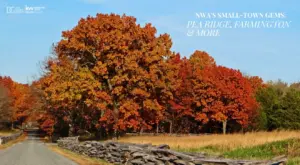
Farmington & Prairie Grove
The Vibe: Two distinct communities west of Fayetteville, each with its own character. Farmington is a growing suburb with good schools. Prairie Grove is a historic town centered around Prairie Grove Battlefield State Park.
Who It’s For: Families who want Fayetteville proximity with more space. People drawn to the Farmington or Prairie Grove school districts. Buyers who want newer construction or acreage at more accessible prices.
The Housing Market: Generally more affordable than Fayetteville proper. New construction is active in both communities. Prairie Grove offers historic homes and larger lots.
Commute Reality: 10–20 minutes to Fayetteville. 30–40 minutes to Bentonville.
Tontitown, Cave Springs, Elm Springs & Gravette
These smaller communities each offer something distinct:
- Tontitown: Known for its Italian heritage, the Tontitown Grape Festival, and a strong community identity. Growing fast with new construction. Convenient to Springdale and northwest Fayetteville.
- Cave Springs: A small, desirable community between Rogers and Bentonville with a highly-regarded school district. Limited inventory, premium pricing for the area.
- Elm Springs: Rural character between Springdale and Cave Springs. More land, fewer subdivisions. For buyers who value space and privacy.
- Gravette: A classic small town in the far northwest corner of the region. Affordable, quiet, and community-oriented. A longer commute to the urban core.
PART THREE: THE PRACTICAL STUFF
Chapter 5: Schools and Education
Education is one of the most common questions we hear from relocating families. Here’s what you need to know:
Public School Districts: NWA is served by multiple school districts, each with its own character. The major districts include Bentonville, Fayetteville, Rogers, Springdale, Siloam Springs, Farmington, Prairie Grove, Gravette, Pea Ridge, and Gentry. Several of these districts consistently rank among the top in Arkansas. School quality and specific programs vary by district and even by individual school, so it’s worth researching specific schools rather than relying on district-wide generalizations.
School Choice: Arkansas has school choice legislation that allows families to apply for transfers between districts under certain conditions. This is worth understanding if you’re considering living in one district but prefer schools in another.
Private Schools: Options include Thaden School (Bentonville), Shiloh Christian School (Springdale), Providence Classical Christian Academy (Rogers), The New School (Fayetteville), and several faith-based options across the region.
Higher Education: The University of Arkansas in Fayetteville is the flagship, with over 32,000 students and nationally recognized programs in business, engineering, agriculture, and architecture. John Brown University (Siloam Springs) is a well-regarded private Christian university. Northwest Arkansas Community College (Bentonville) provides two-year programs and workforce development.
Important Note on Discussing Schools: When researching schools, we recommend consulting official data sources such as the Arkansas Department of Education,
individual school district websites, and third-party platforms that provide objective school
performance data. Every family’s educational priorities are different — what matters most is finding the right fit for your specific children.
Chapter 6: Jobs and the Economy
The Major Employers
| Employer | Headquarters | Approximate Local Workforce |
| Walmart | Bentonville | 15,000+ |
| Tyson Foods | Springdale | 6,000+ |
| J.B. Hunt | Lowell | 5,000+ |
| University of Arkansas | Fayetteville | 5,000+ |
| Mercy Health | Rogers | 3,000+ |
| Washington Regional | Fayetteville | 2,500+ |
| Arkansas Children’s NW | Springdale | 1,000+ |
Beyond these, the supplier ecosystem is enormous. Thousands of companies have offices in NWA specifically to serve Walmart — consumer packaged goods companies, technology vendors, marketing agencies, and professional service firms. This creates a job market with unusual depth in marketing, sales, logistics, data analytics, and technology.
The Remote Work Factor
NWA has become a popular destination for remote workers who can live anywhere. The combination of lower cost of living, outdoor access, and cultural amenities has drawn people from the coasts, Texas, and the Midwest. The region has invested in coworking spaces, gig-speed internet infrastructure, and quality-of-life amenities that appeal to this demographic.
Chapter 7: The Housing Market — What to Expect
Market Conditions (Mid-2026)
The NWA housing market has moved toward balance after the frenzy of 2021–2023. Inventory has increased, giving buyers more options and more time to make decisions. Prices continue to appreciate, but at a more sustainable pace than during the peak years.
Key things to know:
- Multiple offers still happen on well-priced homes in desirable neighborhoods, but bidding wars are less common than they were.
- New construction is active across the region, offering alternatives to resale inventory.
- Days on market have increased, meaning buyers typically have more time to consider their options.
- Interest rates continue to influence buyer behavior and affordability calculations.
The Buying Process in Arkansas
Arkansas is a disclosure state — sellers are required to disclose known material defects. The process typically involves:
- Getting pre-approved with a lender
- Finding an agent who knows the local market
- Viewing homes and neighborhoods
- Making an offer using the Arkansas Real Estate Contract
- Inspection period and negotiations
- Appraisal and final loan approval
- Closing
Working with a local agent who understands the specific community you’re targeting is essential. Market conditions, neighborhood nuances, and even contract norms can vary across the region.
PART FOUR: THE QUESTIONS EVERYONE ASKS
Chapter 8: NWA FAQ
Q: Is Northwest Arkansas a good place to raise a family? A: Many families find NWA to be an excellent place to raise children. The region offers strong school options, extensive parks and trail systems, youth sports programs, and community events throughout the year. The relatively low cost of living means many families can afford more space — both indoors and outdoors — than they could in larger metros. As with any relocation, the best fit depends on your specific priorities for education, activities, and community.
Q: What’s the weather really like? A: Four distinct seasons. Hot, humid summers (90s are common). Mild, beautiful springs and falls. Relatively mild winters with occasional
light snow and ice. The region gets about 45–50 inches of rain annually. Tornadoes are possible — NWA is at the western edge of Tornado Alley — though direct hits on populated areas are uncommon.
Q: Is Northwest Arkansas diverse? A: NWA is becoming more diverse as it grows, particularly in Springdale and Rogers, which have significant Hispanic and Marshallese communities. The presence of Walmart and its supplier ecosystem brings people from around the world. The region is less diverse than major coastal metros, but more diverse than many people expect, and the trend is toward increasing diversity.
Q: What’s the political and cultural climate? A: NWA is politically mixed, with urban areas trending differently from more rural surrounding communities. The presence of the university, the major corporations, and the influx of new residents from across the country has created a region that doesn’t fit neatly into stereotypes. People generally find communities and social circles that align with their values, whatever those may be.
Q: What about healthcare? A: NWA has strong healthcare infrastructure. Washington Regional Medical Center (Fayetteville), Mercy Hospital (Rogers), Northwest Medical Center (Springdale and Bentonville), Arkansas Children’s Northwest (Springdale), and the Veterans Health Care System of the Ozarks (Fayetteville) provide comprehensive care. The region also has a growing network of specialty clinics and providers.
Q: How bad is the traffic, really? A: For people moving from Los Angeles, Atlanta, or Dallas: you’ll laugh at what we call traffic. For people moving from smaller towns: you’ll notice it. I-49 during peak commute hours (7:30–8:30 AM, 4:30–5:30 PM) can be slow, particularly through the Bentonville-Rogers corridor and approaching Fayetteville. Most commutes are 15–30 minutes. The region is investing in infrastructure improvements, including the I-49 widening and the Highway 412 bypass.
Q: What’s the airport situation? A: Northwest Arkansas National Airport (XNA) is located near Highfill, about 15–25 minutes from most of the region’s cities. It offers direct flights to major hubs including Dallas, Atlanta, Chicago, Denver, Charlotte, Houston, and others. For international travel or destinations not served directly, connecting through Dallas or Atlanta is common. The airport has undergone significant expansion in recent years.
Q: Is Northwest Arkansas pet-friendly? A: Very. The trail systems are dog-friendly (leash laws apply). Many restaurants with patios welcome dogs. The region has numerous dog parks, pet stores, and veterinary practices. The outdoor lifestyle extends naturally to four-legged family members.
Q: What if I’m not an outdoor person? A: You’ll still find plenty to enjoy. The restaurant scene, arts and culture, shopping, community events, and Razorback athletics don’t require hiking boots. But it’s worth noting that the outdoor amenities are so woven into daily life here that many people who didn’t consider themselves “outdoorsy” before moving find themselves on the trails or at the lake more than they expected.
Q: What’s the one thing people don’t expect about NWA? A: The sophistication. People arrive expecting a small Southern metro and discover world-class art, genuinely excellent restaurants, and a quality of life that rivals cities twice the size. The gap between expectation and reality is almost always positive.
Q: I’m visiting for the first time and only have a weekend — what would you recommend?
A: If you’ve got 48 hours to get the real flavor of Northwest Arkansas, here’s where I’d send you:
Start your morning at Onyx Coffee — the downtown Bentonville location is the original, and a honey lavender latte there is basically a rite of passage. From there, head to
Crystal Bridges Museum of American Art. It’s free, it’s world-class, and the building itself
— set into a ravine with glass bridges and forested trails — is worth the visit even before you see a single painting. While you’re in the arts district, walk over to The Momentary, a contemporary art and performance space in a converted cheese factory. Have Kids? Check out the Amazeum too.
For lunch, you have decisions to make. AQ Chicken House in Springdale has been serving their famous pan-fried chicken since 1947 — it’s an institution. Or hit Wright’s BBQ in Johnson (or the Rogers location) for brisket that holds its own against anything coming out of Texas. If you’re in the mood for something more elevated, Hugo’s on Fayetteville’s square has been a basement-level landmark for decades, and The Tasting Room at Lake Pointe offers dinner with a view over Loch Lomond.
The outdoor life here isn’t optional — it’s the main event. OZ Trails Bike Park in Bella Vista is a must, and when you’re ready for a break, Ozzy’s Ride & Dine is right there with food, drinks, and a patio overlooking the pump track. Just down the road, Blowing Springs Park connects to the larger trail network — and on Saturdays and Sundays, the Gear Garden at Blowing Springs has live music (note: it’s closed during winter). Tanyard Creek offers a short, scenic hike with a waterfall payoff that never gets old. For mountain bikers, Coler Mountain Bike Preserve in Bentonville is the crown jewel — even if you don’t ride, the Airship Coffee at the top of the climb is worth the walk.
If you need water, Beaver Lake has 28,000 acres of it — rent a boat, find a cove, or just post up at Lake Atalanta in Rogers, which was completely renovated and now has a fantastic trail loop and playground. For a quiet moment, step inside the Mildred B. Cooper Memorial Chapel in Bella Vista — a soaring glass-and-wood chapel designed by the same architect who did Thorncrown Chapel in Eureka Springs.
Cap your weekend with a show at the Walmart AMP (Arkansas Music Pavilion) in Rogers — it’s an outdoor amphitheater that draws major touring acts from spring through fall.
And if you have one more day? Drive an hour east to the Buffalo National River — America’s first national river. Float it, hike the bluffs above it, or just stand at the overlook at Whitaker Point and understand why Arkansans get quiet and proud when they talk about this place.
Chapter 9: Making the Move — Your Next Steps
1. Visit Before You Commit
If at all possible, spend a long weekend here. Drive through the different communities. Eat at local restaurants. Walk the downtown squares. Ride the trails. Talk to people. The feel of each town is different, and you won’t know which one fits until you experience them.
2. Get Clear on Your Priorities
Rank what matters most: commute time, school access, walkability, space, budget, proximity to outdoor recreation, cultural amenities. Your ranking will point you toward different communities.
3. Connect With a Local Agent
The NWA real estate market moves differently in different communities. An agent who knows the specific towns and neighborhoods you’re considering can help you understand what’s realistic for your budget, timeline, and priorities.
4. Consider Renting First
If you’re unsure which community is right for you, renting for 6–12 months while you explore is a smart strategy. It takes the pressure off and lets you experience daily life before committing to a home purchase.
5. Start Your Research
Use the resources available — school district websites, city government pages, local news outlets, community Facebook groups, and official data sources — to build your understanding of each community.
A Final Word
People move to Northwest Arkansas for jobs, but they stay for the life they build here.
They stay for Saturday mornings at the farmers market. For after-work rides on the Greenway. For the way the Ozarks light up in October. For neighbors who become friends. For the feeling that they’re part of something growing — not just a region, but a community.
If that sounds like what you’re looking for, we’d love to help you find your place in it.
This guide is provided for informational purposes. All housing-related decisions should be made in consultation with a licensed real estate professional. The Duley Group at Keller Williams Market Pro Realty is an Equal Housing Opportunity brokerage.
Information about communities is presented objectively; we encourage all prospective buyers to research communities based on their own criteria and priorities.